Freezing and Thawing Effects on Marinated Chicken Texture
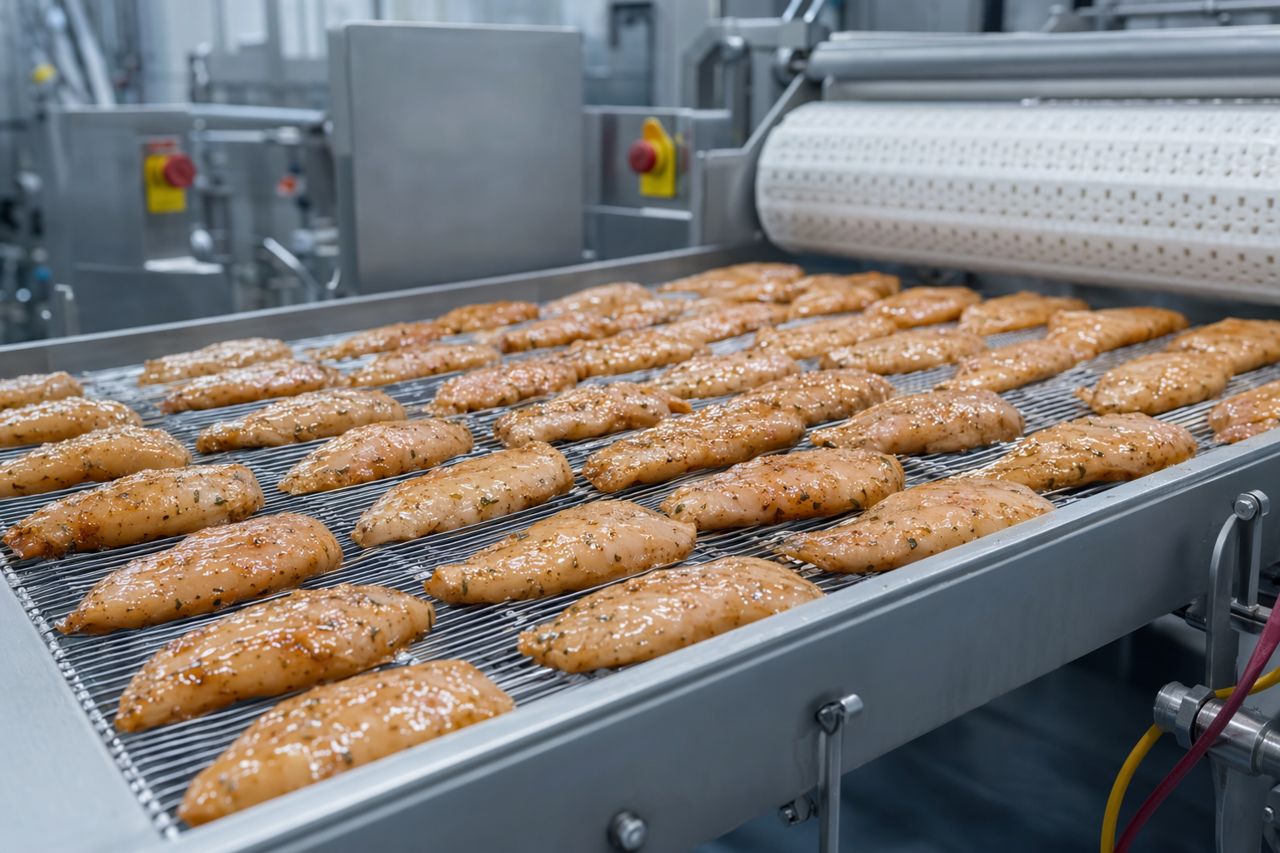
For a poultry further-processing plant, freezing is often a logistics tool, not a texture strategy. It helps balance raw material availability, production scheduling, and customer demand. But once marinated chicken is frozen and thawed, the muscle system does not behave exactly like fresh injected or tumbled meat.
Ice crystal formation, protein denaturation, purge loss, and marinade redistribution can all change the final bite. If the product also uses an enzyme tenderizing system, the process window becomes even more important: temperature history, dwell time, salt level, phosphate or phosphate-free formulation, mechanical action, and cook profile all influence the tenderness outcome.
FibreYield works with R&D, QA, and plant process teams that need repeatable tenderness without drifting into mushy texture, excessive yield loss, or label complications. As an enzyme supplier for poultry meat tenderizing, we focus on practical validation: what happens in the tumbler, chiller, freezer, tempering room, and cook line—not just what looks promising on a bench sample.
Why freezing changes marinated chicken texture
Marinated chicken is a hydrated protein system. Injection or tumbling introduces water, salt, functional ingredients, flavors, and sometimes enzyme-based tenderizing aids into a structure that is already variable by bird size, deboning time, muscle type, and raw material handling.
Freezing adds another stress step.
1. Ice crystals disrupt muscle structure
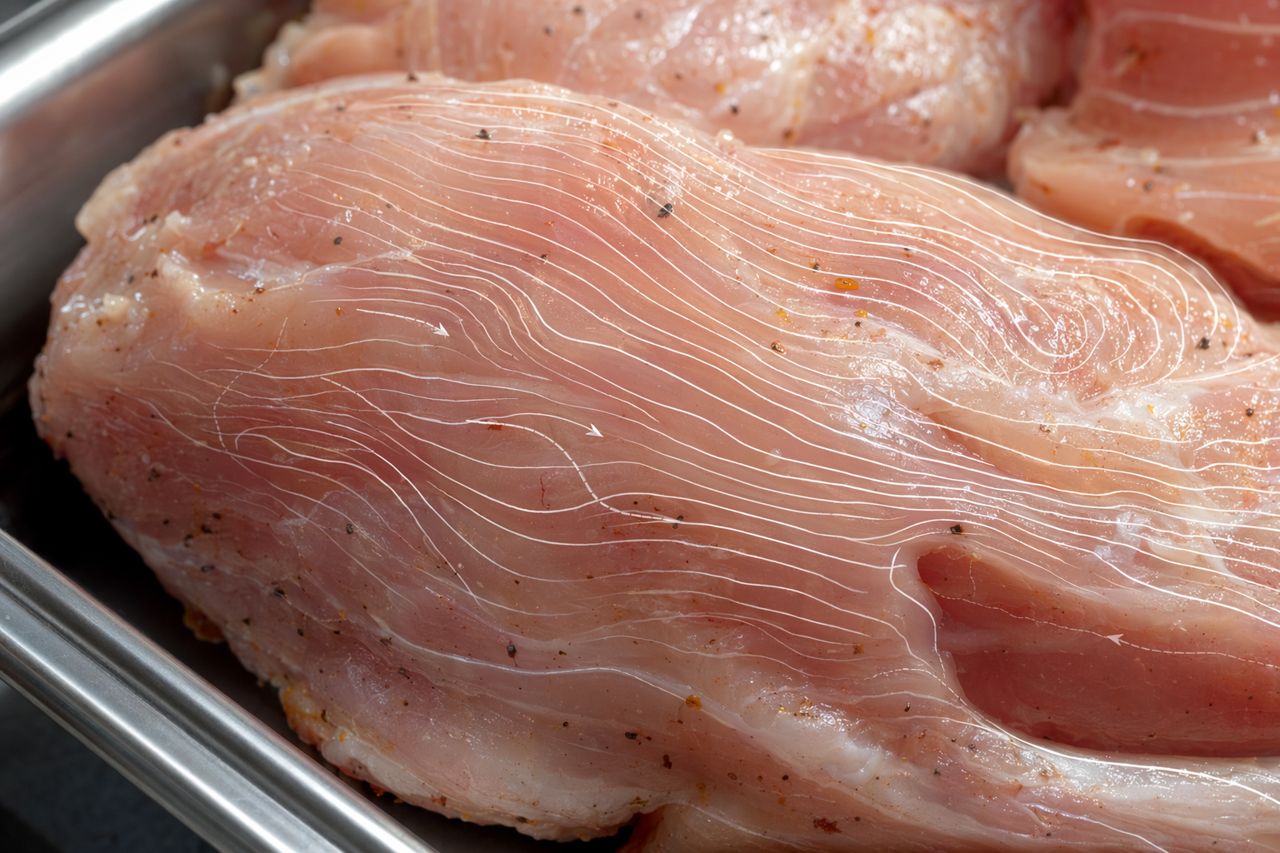
As water freezes, ice crystals form within and between muscle fibers. Slow freezing generally allows larger crystals to develop, which can physically disrupt the tissue network. On thawing, that disruption may show up as:
- Higher purge in bags, combos, or totes
- Softer exterior bite with a firmer interior
- Less uniform marinade retention
- Greater variation between pieces after cooking
Fast freezing can reduce some damage, but it does not eliminate the texture impact. The starting formulation and pre-freeze process still matter.
2. Thawing can move marinade away from the target zone
During thawing, liquid migrates. If the product was injected, the original injection pattern may no longer represent the final distribution of moisture and functional ingredients. If the product was tumbled, surface pickup can separate from deeper muscle hydration.
For high-throughput plants, this can create a familiar issue: the line meets pickup targets, but cooked texture is inconsistent across pieces or across pallets.
3. Protein functionality may decline after freeze-thaw exposure
Salt-soluble proteins help bind water and support cooked bite. Freeze-thaw stress can reduce their functional performance, especially when the product experiences extended frozen storage, temperature fluctuation, or repeated partial thaw events.
This matters for tenderness because the eating experience is not only about muscle breakdown. It is also about water retention, cooked firmness, slice integrity, and how the product behaves under compression.
What freeze-thaw means for enzyme tenderizing
Enzyme tenderizing can be a strong tool when the process is controlled. It can help reduce bite toughness, support tenderness targets, and improve repeatability across naturally variable raw material. But freeze-thaw conditions can change how an enzyme system expresses in the finished product.
The main question is not simply, "Will the enzyme work?" The better plant question is:
Can the enzyme system deliver the target bite after the real temperature history of this product?
Key variables to control
For marinated chicken that will be frozen and thawed, process teams should look at the full chain:
- Point of addition: injection brine, tumble marinade, surface application, or staged process
- Pre-freeze dwell: time between application and freezing
- Freezing rate: blast, spiral, plate, tunnel, or slower bulk freezing
- Frozen storage conditions: expected hold time and temperature stability
- Thawing method: refrigerated tempering, water-assisted thawing, or direct cook from frozen where applicable
- Cook profile: belt speed, steam, impingement, frying, roasting, or sous-vide-style thermal steps
- Final texture target: bite tenderness, shred behavior, slice integrity, or pull-apart texture
Small changes in these variables can shift the finished texture. That is why FibreYield supports validation trials around plant reality instead of assuming one process model fits every SKU.
Common texture defects after freezing and thawing
Excess purge before cooking
Purge is not only a yield issue. It can indicate that the muscle structure is losing its ability to hold marinade. In enzyme-tenderized systems, excessive purge may also reduce process predictability because the ingredient distribution is no longer where the formulation intended.
Mushy or pasty surface texture
A soft exterior with weak bite can occur when tenderizing action is concentrated near the surface, when thawing is too slow, or when the product experiences extended dwell before cook. The correction may involve changing addition point, dwell time, enzyme selection, or thermal timing.
Firm core with tender surface
This is common when marinade penetration is uneven or when freezing occurs before the system reaches a uniform distribution. It can be especially noticeable in thick breast fillets, formed portions using whole-muscle components, or products with variable piece sizing.
Batch-to-batch tenderness drift
If frozen inventory comes from multiple production dates, raw material sources, or hold times, the same cook line can produce noticeably different bite. A controlled enzyme tenderizing program should account for that variation during trial design.
Practical trial design for further-processing plants
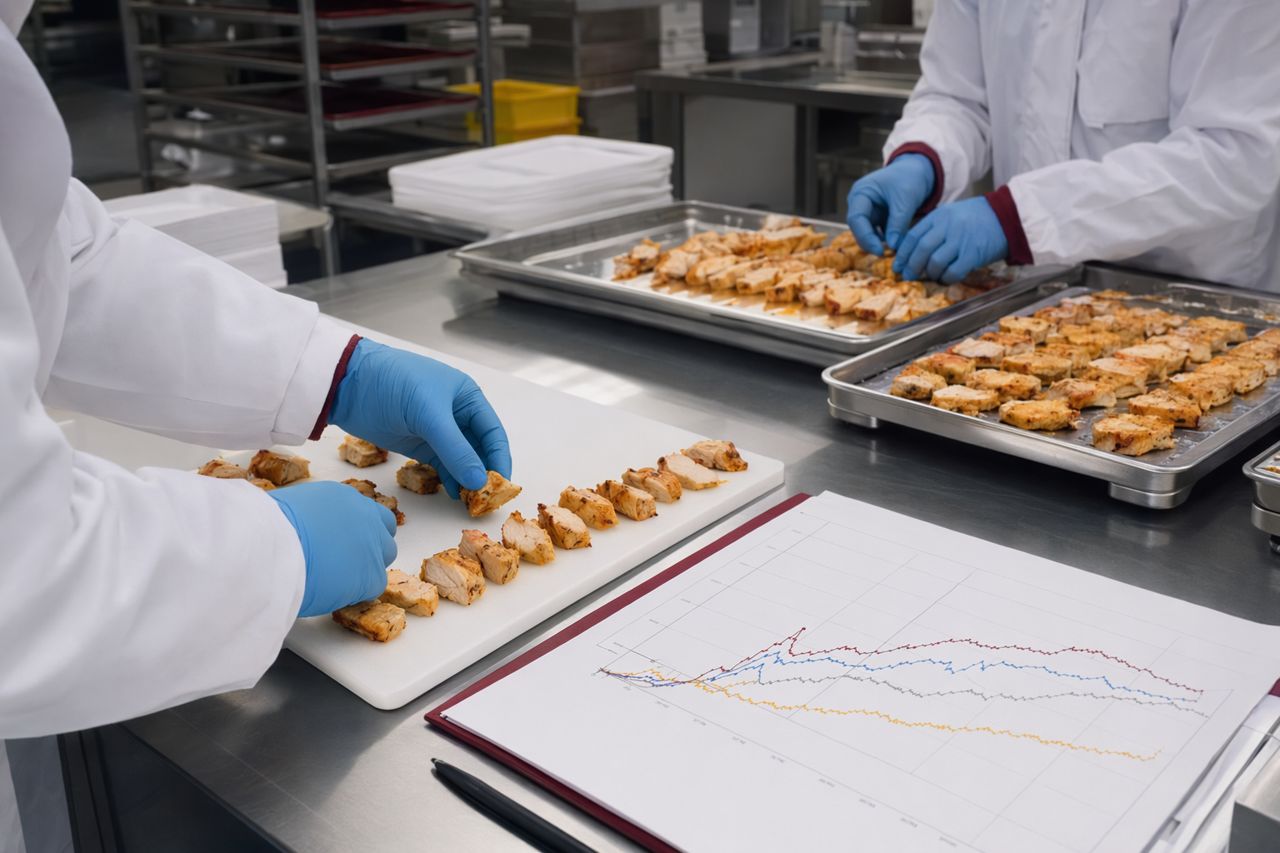
A useful freeze-thaw tenderizing trial should not only compare fresh versus frozen. It should simulate the product’s real commercial path.
Recommended trial structure
-
Define the finished texture target
Agree on the desired bite: tender breast fillet, clean slice, juicy strip, pull-apart thigh meat, or formed product texture. -
Map the actual process path
Include injection pressure range, tumble time, vacuum use, rest time, freezer type, storage duration, thaw method, and cook profile. -
Run fresh and freeze-thaw comparisons
Evaluate the same formulation before freezing and after controlled frozen storage and thawing. -
Measure plant-relevant outcomes
Track pickup, retained marinade, purge, cooked yield, visual texture, bite, slicing behavior, and sensory acceptance. -
Stress the process deliberately
Include realistic variation: larger fillets, longer hold time, slower tempering, or edge-case raw material. This helps define the safe operating window. -
Confirm scale-up behavior
A bench sample can look clean while a production tumbler behaves differently. Final validation should happen under line conditions.
Label and formulation considerations
Many poultry processors are balancing tenderness targets with label expectations. Some customers accept traditional phosphate systems. Others require phosphate-free, reduced-sodium, clean-label, or simplified ingredient declarations.
An enzyme-based tenderizing approach can support these formulation goals, but it must be matched with the rest of the system. Salt level, acidulants, flavor carriers, starches, fibers, hydrocolloids, and thermal steps can all influence the final bite.
FibreYield helps teams evaluate enzyme options in the context of the whole marinade, not as a standalone ingredient decision.
Where FibreYield supports your team
FibreYield supplies enzyme solutions for poultry meat tenderizing and supports application work from first concept through plant validation. Our role is to help your team define a reliable path, reduce trial noise, and scale the process with confidence.
Typical support includes:
- Tenderness target definition by product format
- Enzyme system selection for marinated chicken applications
- Freeze-thaw process review
- Bench and pilot trial planning
- Plant-scale validation support
- Troubleshooting for purge, texture drift, or uneven bite
- Guidance for formulation and label constraints
We do not treat freezing as an afterthought. If your product will be frozen, thawed, and cooked under commercial conditions, the enzyme tenderizing system should be evaluated under those same conditions.
A controlled path to repeatable tenderness
Freezing and thawing can change marinated chicken texture in ways that are difficult to correct at the end of the line. The best results come from designing the tenderizing system around the full process: raw material, marinade, mechanical action, temperature history, and cook profile.
For plants producing high-volume marinated chicken, the goal is not maximum softening. The goal is controlled tenderness, batch repeatability, retained yield, and a bite that stays within specification after the product’s real distribution cycle.
If you are developing or troubleshooting a frozen marinated chicken program, FibreYield can help structure the trial and recommend an enzyme approach matched to your plant conditions.
Request a quote and share your product format, process flow, and tenderness target. Our team will help map the next validation step.